

Trending


Explore all topics

Prolactin and circadian rhythms: sleep-loss map and MASI program fit
MASI Learn · Prolactin, circadian rhythm and sleep-loss map Prolactin’s nighttime rise is largely sleep-dependent — not a free-floating “longevity hormone” you can buy in a bottle. Classic human experiments...

Marine vs plant omega-3s: EPA/DHA map and MASI program fit
MASI Learn · Marine vs plant omega-3 map and longevity program fit Marine omega-3s deliver ready-to-use EPA and DHA. Plant omega-3s mostly deliver ALA, which converts poorly to EPA/DHA in...

Glutathione for Parkinson's: research map and MASI program fit
MASI Learn · Glutathione biology, Parkinson research map and longevity program fit Glutathione (GSH) is a real antioxidant story in Parkinson’s research — not a MASI product and not a...

Why recovery slows with age: tools map and MASI program fit
MASI Learn · Age-related recovery, training tools and program fit Recovery slows with age mainly because muscle becomes harder to rebuild, low-grade inflammation rises, mitochondria deliver less usable energy, sleep...

Machine learning for DNA methylation age: clock map and MASI program fit
MASI Learn · Epigenetic clocks, machine learning and program fit Machine learning for DNA methylation age prediction is a research and clinical-biomarker toolkit — not a MASI product feature. Algorithms...

Blue Zones: lifestyle longevity patterns and MASI program fit
MASI Learn · Blue Zones, lifestyle longevity and program fit Blue Zones are geographic longevity clusters — not a single superfood, gene or supplement — where unusually high rates of...

Melatonin vs cortisol: circadian biomarkers and MASI program fit
MASI Learn · Melatonin, cortisol and circadian program fit Melatonin and cortisol are complementary circadian biomarkers — not rivals in a which-hormone-wins contest and not a reason to self-dose both...

Sleep biomarker analysis: class map, evidence ladder and MASI program fit
MASI Learn · Sleep biomarkers, analysis ladder and longevity program fit Sleep biomarkers are measurable signals that describe sleep timing, architecture, physiology or related biology — not a home kit...

Oxidative stress in IBD: redox map, evidence ladder and MASI program fit
MASI Learn · Oxidative stress, IBD literacy and program fit Oxidative stress is a real, measurable amplifier of intestinal inflammation in Crohn's disease and ulcerative colitis — not a vague...

Peptide delivery systems: oral barriers, SNAC paths and MASI program fit
MASI Learn · Peptide delivery literacy and program fit Peptide-based delivery is a pharmaceutical engineering field — oral peptides, injectables, cell-penetrating carriers, permeation enhancers and nanoparticles — not a feature...

FGF signaling and aging: pathway map and MASI program fit
MASI Learn · FGF signaling, aging biology and program fit FGF signaling is a family of fibroblast growth factor pathways that help tissues repair, remodel and stay metabolically coordinated —...

Biosensors and sleep stages: accuracy ladder and MASI program fit
MASI Learn · Biosensors, sleep stages and longevity program fit Biosensors estimate sleep stages from movement, heart signals, temperature, sound or limited EEG — they do not replace polysomnography. Use...

CRISPR delivery systems: viral vs LNP paths and MASI program fit
MASI Learn · Gene-editing literacy and longevity program fit In vivo CRISPR only works as well as the delivery system that carries the editor to the right cells, at the...

WHO GMP water guidelines: purity grades, tests and MASI quality fit
MASI Learn · Manufacturing quality, water systems and product integrity WHO and pharmacopeial water grades exist because process water is both an ingredient and a contamination highway—not because “pharma water”...
Mitochondrial biogenesis and skin cells: evidence ladder and MASI program fit
MASI Learn | Mitochondria, skin energy and visible aging Mitochondrial biogenesis is the cell’s program for making new mitochondria so energy supply can match repair, barrier work and stress recovery....

ATP and mitochondria: energy for repair and MASI program fit
MASI Learn · Cellular energy & repair ATP is the spendable energy currency of the cell; mitochondria are the factories that make most of it. Repair work—DNA maintenance, protein quality...

Omega-3 dosage and timing: evidence ladder and MASI program fit
MASI Learn · Nutrition science For most healthy adults, a practical omega-3 target is about 250–500 mg/day of combined EPA + DHA from food or a quality oil — taken...

Cell reprogramming for longevity: long-term effects and MASI fit
MASI Learn · Cellular aging biology Cell reprogramming can reverse aspects of cellular age in the lab — and long-term effects are still the hard scientific question. Full conversion of...

Circadian and mitochondrial synergy: energy clocks and MASI program fit
MASI Learn · Circadian biology & cellular energy Direct answer: your circadian clock and your mitochondria are one integrated energy system, not two separate wellness topics. Clock genes time NAD+...
Caloric restriction and mitochondrial biogenesis: evidence and MASI fit
MASI Learn · Mitochondria & energy Caloric restriction is one of the most studied ways to stimulate mitochondrial biogenesis — and you do not need extreme dieting to borrow the...

7 factors that impact nutrient absorption: practical map and a MASI program
MASI Learn · Absorption literacy · Seven factors + MASI program Nutrient absorption is shaped less by a single “super pill” and more by seven practical factors: meal composition, GI...

Herbal extract standardization: quality challenges and smarter longevity choices
MASI Learn · Quality & sourcing literacy Standardizing herbal extracts is hard — and that difficulty is exactly why label honesty and third-party testing matter for longevity products. Plants vary...

Heart health supplements: evidence map and a MASI program
There is no universal top-6 heart list. Learn foundations first, honest off-catalog tools (omega-3, CoQ10), and how Premium NMN + Resveratrol fit a longevity program without replacing cardiology care.

NMN vs resveratrol: how to choose and when to use both
NMN and resveratrol do different jobs. Learn how to choose a first bottle and when the MASI core pair is the better program.

Fisetin safety and tolerability: practical map and a MASI program
MASI Learn · Safety · Fisetin For healthy adults using labeled servings, fisetin is generally discussed as a well-tolerated plant flavonoid — not a risk-free free-for-all, not a drug, and...
Collagen and hyaluronic acid
A precise look at collagen and hyaluronic acid as complementary matrix molecules—what each does, where synergy is plausible, and where marketing overreaches. Educational only.

How aerobic exercise improves heart rate variability
GSC priority How aerobic exercise improves heart rate variability Search demand on this URL gets a direct answer, honest limits, and a multi-month path — not bait. [1] [2] Direct...
Extracellular matrix and skin aging
MASI Learn · Skin Extracellular matrix and skin aging Collagen/elastin matrix basics, UV damage, and realistic roles for systemic vs topical care. Clinical education. Limits first. Skin pillar · photoprotection...

NMN dosage and blood glucose: evidence ladder and MASI program fit
MASI Learn · NMN, dose & glucose metabolism NMN is not a diabetes drug, and there is no single “blood-glucose dose chart” that every adult should follow. The strongest human...

Liposomal vs regular supplements: absorption evidence and MASI program fit
MASI Learn · Delivery systems & bioavailability Liposomal delivery can improve absorption for some nutrients in some formulations — it is not a universal 5–10× upgrade stamp for every capsule...

5 Side Effects of Probiotics and How to Manage Them
Probiotics can support gut health, immunity, and more, but they might cause some side effects, especially when you first start taking them. Here's a quick overview of the five most...

How temperature affects sleep quality: evidence and MASI program fit
MASI Learn · Sleep environment & recovery biology Sleep quality is tightly coupled to body temperature — not only to mattress marketing. Falling asleep is easier when core temperature is...

Personalized sleep monitoring ethics: accuracy, privacy and MASI program fit
MASI Learn · Personalized sleep monitoring ethics and longevity program fit Personalized sleep monitoring is useful when it improves decisions—and ethically risky when raw biometrics become ungoverned profiles, false clinical...
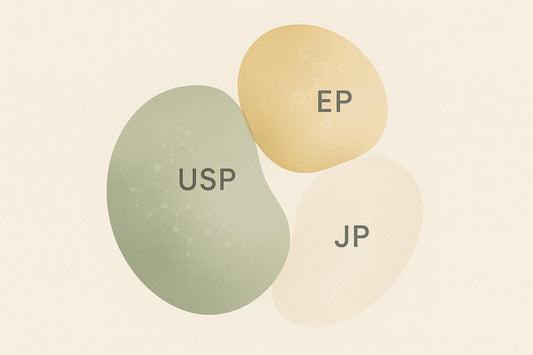
USP vs EP vs JP: pharmacopoeial standards and buying quality longevity supplements
MASI Learn · Quality literacy · Pharmacopoeias USP, EP, and JP are real pharmacopoeial standard systems — not interchangeable marketing stickers, and not proof that a longevity bottle will deliver...
Gene editing for aging ethical challenges
GSC priority Gene editing for aging ethical challenges Search demand on this URL gets a direct answer, honest limits, and a multi-month path — not bait. [1] [2] Direct answer...

Selenium and neurodegeneration: honest map and a MASI program
MASI Learn · Brain longevity · Selenium map + MASI program Selenium supports brain antioxidant defenses mainly as selenoproteins such as glutathione peroxidases — it does not “fight” Alzheimer’s or...

Organoids in aging research current trends
GSC priority Organoids in aging research current trends Search demand on this URL gets a direct answer, honest limits, and a multi-month path — not bait. [1] [2] Direct answer...

Resveratrol and Mitochondrial Biogenesis: What Studies Show
Resveratrol may help your cells produce energy, fight aging, and improve overall health. Here's what studies reveal: Mitochondrial Biogenesis: Resveratrol boosts the creation of new mitochondria, vital for energy production...

How aging affects tight junction proteins: barrier biology and MASI fit
MASI Learn · Gut barrier biology As we age, the proteins that seal intestinal epithelial cells can remodel — and that barrier change matters for inflammation biology. Tight junction proteins...

ESR and ROS detection
MASI Learn · Methods ESR and ROS detection Electron spin resonance as a lab technique for radical species — not a home longevity test. Clinical education. Limits first. ESR/EPR is...

Stem cell therapy costs by country comparison 2025
GSC priority · boundaries Stem cell therapy costs by country comparison 2025 Stem-cell clinics and lab techniques are not the same category as daily longevity nutrients. This page keeps the...

Chemiluminescence for ros how it works
GSC priority Chemiluminescence for ros how it works Search demand on this URL gets a direct answer, honest limits, and a multi-month path — not bait. [1] [2] Direct answer...

Exercise and lifespan: how much is enough and a MASI program
MASI Learn · Foundations · Movement How much exercise extends lifespan? In large human cohorts, moving from little or no activity into regular moderate-to-vigorous exercise is one of the strongest...

3D bioprinting and lifespan hype
MASI Learn · Frontier 3D bioprinting and lifespan hype Bioprinting is tissue-engineering research — not a consumer lifespan extender on shelves today. Clinical education. Limits first. Exciting science; not a...

Senolytics and aging: research framing
MASI Learn · Senescence Senolytics and aging: research framing What “senolytic” means in labs, why long-term human certainty is limited, and how fisetin education stays humble. Clinical education. Limits first....

Morning vs evening NMN: best time and a MASI program
MASI Learn · Practical use · NMN Morning is the best default time for Premium NMN for most adults — not because evening is “wrong,” but because a fixed morning...

Polyphenols and prescription medicines: what actually matters
MASI Learn · Safety · Polyphenols Yes — some polyphenols can change how certain prescription medicines behave. The practical question is not “are polyphenols dangerous?” It is which medicine classes...

Omega-3 purity checklist: how to verify quality and a MASI program
MASI Learn · Quality literacy · Omega-3 purity map + MASI program To check omega-3 supplement purity, verify labeled EPA + DHA milligrams (not only “fish oil” grams), demand recent...

Fluorescence probes for ROS
MASI Learn · Methods Fluorescence probes for ROS How fluorescent probes estimate ROS in vitro — artifacts included — and why this is not consumer diagnostics. Clinical education. Limits first....

Senolytic clinical trials: populations, evidence ladder, and MASI fit
MASI Learn · Senolytic clinical trials Human senolytic trials so far are mostly small, disease-cohort studies of intermittent dasatinib plus quercetin — not mass-market proof that a capsule erases aging...